How to Get a Tattoo Apprenticeship
July 9, 2026 · Nando Mondragon
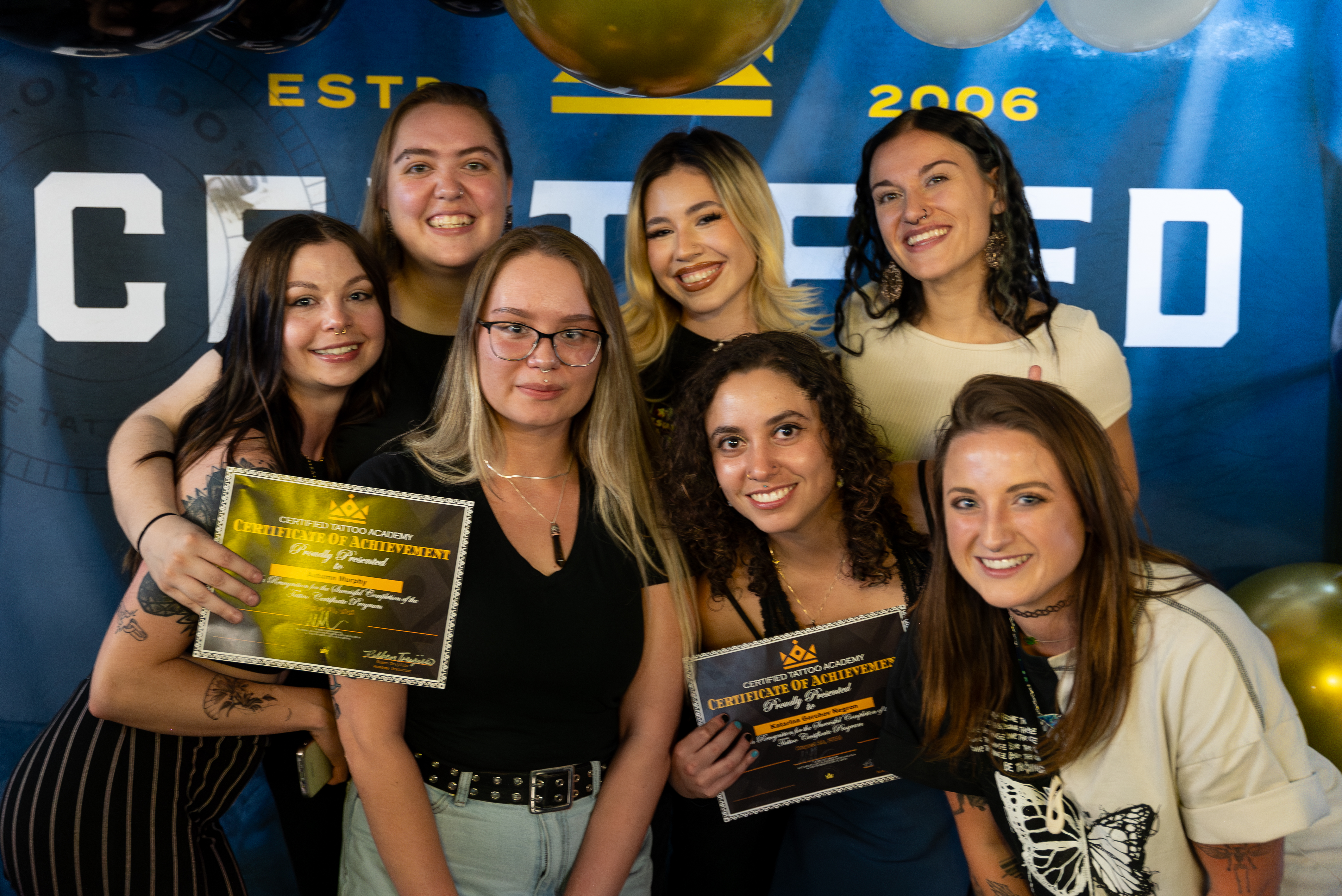
By Nando Mondragon, Founder of Certified Tattoo Studios
You searched "how to get a tattoo apprenticeship" and you landed here. Good. Because I'm going to answer that question honestly, and then I'm going to tell you something almost nobody in tattooing will say out loud:
You don't need one.
I've spent 20 years building the highest-rated tattoo studio group in Colorado. I've hired, trained, and developed tattooers across four studios. I've made more money, tattooed more people, and logged more hours with happy clients than any tattooer I've ever met. And I never did an apprenticeship.
So before you commit years of your life to a stranger's undefined program, read this first.
I Never Got an Apprenticeship. Here's What I Got Instead.
When I began tattooing 20 years ago, there was no formal apprenticeship available to me. What I got was knowledge passed down from people who wanted to express themselves, tattooing things that mattered to them. Family. Loyalty. Identity.
There was no gatekeeping. No weird control. Just mutual respect and a code of integrity. They gave me the best they possibly could so I could put out the best I possibly could. Nobody put fear in me. It was get on the bike and start riding. And if I fell, they told me to get back up quickly and keep going.
I didn't even know the toxic side of tattooing existed for years. And that turned out to be a gift, because here's what I see in almost every traditional apprenticeship today:
Fear gets installed on day one. They limit you. They make you wait. They make you "earn it" before you're allowed to touch anything. And I'll tell you the real reason why: the person teaching you knows that once you get the information, you'll pass them up if you want it more than they do.
Without that wasted time, I've watched tattooers go from mediocre to the moon.
The Uncomfortable Truth: There Is No Standard
Here's the problem nobody talks about. School has a defined structure. You know what you learn in elementary, middle school, high school, college. Tattoo apprenticeships have nothing like that.
If John in Winemucca, Nevada takes you on as an apprentice, everyone just agrees that's fine. Nobody knows what John is teaching, how much, how little, or whether John should be teaching anyone at all. There is no baseline. No foundation. No finish line.
I'll say it plainly, even though it makes me sound like a jerk in 2026: if there's no actual definition of what an apprenticeship is, and everyone just wings it, the traditional tattoo apprenticeship is a scam.
I've heard of apprenticeships that were free. I've heard of apprenticeships that cost $20,000. I've heard of ones that lasted six days and ones that dragged on for five years. You're signing up for something with no defined price, no defined timeline, and no defined outcome. Compare that to college. Four years, known cost, known credential. People can at least make an informed decision. In tattooing, you can't. That's the scam.
You're Already a Tattooer. Here's the Drummer Rule.
If a kid gets a drum set for Christmas and starts banging on it, that kid is a drummer. Not a world-class drummer. Nobody's paying them to play. But they're a drummer, and everyone accepts that.
Tattooing needs the same rule. If you learn to do it the right way, and the right way is simple: safe, clean, no cross-contamination, no infections, no bad healing, then you're a tattooer. The subject matter, the style, the skill level, that's your journey. Nothing about it disqualifies you from starting.
That's why we built the Tattoo Blue Book: so the community can finally understand the difference between a beginner and a top-tier tattooer, with respect and integrity, instead of pretending there's some invisible qualification you need before you're allowed to exist.
Your Exact Playbook (Start This Week)
If you're facing the typical gatekeeping shop, here's what I'd tell an 18-year-old to do right now:
Step 1: Get your Bloodborne Pathogens certification. This is the real qualification, and it costs about $10 to $15. The Red Cross and other CPR training providers offer it, and the certificate is good almost anywhere in the country. It teaches you things that make you better at life, not just tattooing. Low cost, guaranteed net positive. Do it this week.
Step 2: Study cross-contamination until it's automatic. This has been taught across the medical field forever, and you can learn it fast. Make it a non-negotiable standard from now until the end of your career. Never cut corners. Never put a client at risk. That's integrity, and it's the foundation everything else gets built on.
Step 3: Stop waiting on your portfolio. Your portfolio is something you build across your entire career, not something you need finished before you begin. Here's the truth: shops are not impressed by beginner portfolios. Even if you're an incredible pencil artist, it doesn't always translate to skin, and they know that. What they're actually looking for is a person who takes it seriously, respects the craft, and wants to enrich the community instead of competing for their clients.
Step 4: Walk into shops like you belong there. Because you do. If it's a professional place of business on Google, you have the same right as anyone in the public to walk in and ask. Do it with respect. Don't walk in listing shortcuts or acting like you already know the way. You're there because you don't know, and that's fine. But respect goes both ways. If a shop is rude to you, talks down to you, or treats you like you're less than them, turn around and walk out. Then walk into the next one. Nobody's edge in skill gives them the right to disrespect you.
Case Study: Brian Went From "Honestly Awful" to $8,000 a Day
Brian came to me early in his career from a small struggling shop. His work was bad. I mean that honestly. It was bad enough that I had a hard time saying yes to hiring him. And the saddest part? Nobody at his old shop ever told him. He worked there for years, paying his rent and commission, helping the owner profit, and nobody gave him honest feedback. That's tattooing. Nobody tells you the truth.
But I saw a good, honest, quiet young guy who needed support and some big homie energy. So we gave him both.
Here's what happened next, and it says everything about this community. The established black and gray tattooers at my studio, guys I'd invested years and serious money into developing, quit the day Brian was supposed to start. No conversation, no sit-down. They packed up in the middle of the night and left because they thought his work was too bad to be associated with. Guys he looked up to decided he wasn't good enough to even share a building with them.
So on day one, Brian had a choice: chase the tattooers who abandoned him, or trust the system that built them. He stayed.
Our system took the marketing, the booking, the endless DM back-and-forth, and the admin off his plate completely so he could pour everything into the craft. Studying at night. Better references. Light and shadow. High-contrast black and gray with clean white highlights. Honest feedback at every step, which he'd never had in his life.
The result: Brian became better than the guys he used to look up to. At his peak he was charging around $8,000 for a full day, booked out six months in advance, four to five days a week. I've never heard of another tattooer sustaining that. Today he owns his own shop, tattoos three or four times a month by choice, and lives with total freedom.
No apprenticeship. No trophies. No guest spots. No conventions. Just great work, honest feedback, and a system that let him focus on the art.
The Horror Stories Nobody Posts About
I'd estimate 90% of apprenticeships are horror stories. The most common one I hear: "My mentor wouldn't even let me touch a machine for two years." Two years of cleaning the shop, doing setups, answering phones, running errands. That's not education. That's exploitation with a title attached.
And when you hear someone praising their brutal apprenticeship, ask yourself what's really going on. A lot of it is programming. If they admit the apprenticeship was a waste, they have to admit they were wrong, and nobody wants that.
Here's what the traditional route actually costs: years, money, and confidence. And the confidence part is the one that makes me angry, because confidence is already in you. Somebody starts taking it from you as a teenager, when you get yelled at for drawing in class and told to stop scribbling on your notebook. If you were courageous enough to keep drawing anyway, you deserve a seat at the table. Don't let a so-called mentor finish the job the world started.
Stealing a beginner's confidence is an easy way for mediocre people to stay on top. I've watched guest tattooers walk into my studios and try to poison our young apprentices with the same limiting beliefs they were fed. We shut that down every time.
To Be Fair: What a Good Mentor Actually Looks Like
I'm not saying every mentor is bad. There are versions of an apprenticeship I would fully endorse. A genuinely good mentor looks like this:
They have integrity and don't claim to have it all figured out
They let you question ideas without taking it as a personal attack
They're inclusive and don't write you off at the door
They actively want you to surpass them, and they teach like it
If you find that person, learn everything you can from them.
But before you commit a year of your life, run this test: ask them to define the apprenticeship. Exactly. What's the timeline? Six weeks, twelve weeks, two years? What are the milestones? What does it cost? What do you walk away with?
If the answer is vague, "just put in the work and we'll get to the machine at some point," walk away. You'd never sign up for a college with no defined program length or cost. Don't do it here either.
The Money: Traditional Route vs. a Defined Program
Nobody can tell you what a traditional apprenticeship costs or pays, because there's no data. It's all over the place, and after years of doing what your mentor says instead of what builds a career, most people come out earning very little.
Here's what a defined program looks like, using ours at Certified Tattoo Academy as the example, because we track everything:
Cost to start: under $2,000 total, including equipment. Up to $3,000 to $5,000 if you want premium gear or extra in-person training.
The path: digital tiny-flash program, then in-person training, then a practical test of 100 tiny flash tattoos on real clients. Those 100 tattoos put you through every skin type, body type, and problem area a tattooer faces. Your confidence builds fast because it's real.
When you get paid: right away after certification. Tattoos run $100 to $600 and you keep a strong percentage.
First-year income: our certified tattooers typically start at $6,000 to $8,000 a month, plus $1,000 to $3,000 a month in tips. Our best first-year tattooer made $220,000.
And the foundation underneath all of it is client-first. It's not about your styles and your ideas yet. It's about serving the client. Once you've served hundreds of them, you earn the trust and the demand that lets you do exactly the creative work you want. The old tattoo world demanded clients take whatever the tattooer gave them. The new one builds trust. Trust wins.
Tools: Hands Over Brands
I learned to tattoo with almost nothing. Machines built from motors and Walkmans. Needles made from lighter springs. Ink made from black smoke. So I will never tell you that a brand name makes the tattooer. Hands over brands, always.
That said, here's my honest guidance:
Machines: Mast and Dragonhawk. Both are fair-priced, high-quality, and built by companies that actually listen to tattooers. You don't need a $1,000 machine to start. Like clothing, an expensive brand is still just a t-shirt. There are finer details, but it's not the difference people pretend it is.
Supplies: Find your sweet spot between cheap and overpriced. If matching colorful setups make you happy, do that. If you want eco-friendly, check out Forte Tattoo Tech, the plant-based supply line built by tattooer Dillon Forte. Products created by real tattooers who care about the community's future are the ones worth supporting.
Practice methods: Try everything. Paper, fruit, balloons, fake skin, all of it. But understand the limit of fake skin: I've watched beginners pour 12 hours into a fake-skin piece that would physically shred a real client's skin. Fake skin never teaches you body positioning, how to pull a line around a real limb, how to position a client, or pain management. Those only get learned on people. Don't confuse fake-skin hours with real progress.
A warning: watch out for the grifters. If someone's selling you a flashy get-rich-quick tattoo coaching program or digital course, look at their actual life. If they're renting a corner of a shop and funding the Lamborghini fast lifestyle with their course sales, run. Only pay to learn from someone whose life you would actually want.
Licenses, "Scratchers," and the Legal Reality
Here's a reality check: tattooing, a permanent practice that opens skin and draws blood, has less regulation and oversight than almost anything comparable. The community has always self-regulated with non-negotiable safety rules that shops uphold whether the health department is watching or not. Respect those rules. They're real.
But understand what a license actually is. In 20 years, I've never heard one tattooer ask another if they're licensed. A license is legal validation, nothing more. Depending on your city and state, it means you paid a fee and maybe passed some hours and tests. There are licensed tattooers doing horrible work and unlicensed tattooers who are world-class and internationally respected. Know your local laws, follow them, and don't confuse a license with skill.
Two more truths:
Don't tattoo out of your home. Beyond any legal issues, it's not professional. You can make your room look as nice as you want. It's still a bedroom. I'd never get tattooed in one, and your future clients deserve better.
Don't accept the word "scratcher." That term was invented to make tattooing look insurmountable so mediocre gatekeepers could keep the door shut. Meanwhile, the barrier to entry has collapsed. You can get licensed, sign a salon suite lease, and legitimately own a tattoo studio for under $1,000. The gate is gone. Don't let anyone disrespect your labor with a label designed to keep you out.
Learning outside a shop will never be fully "accepted" by the old guard. But here's the secret: doing an apprenticeship doesn't buy their acceptance either. So do what's best for you. Just make sure you're actually learning.
Your Next Step
Close this tab and do two things:
Get your bloodborne pathogens certification. About $10 to $15, available through the Red Cross and CPR training providers, done in an afternoon.
Complete cross-contamination training and make it your permanent standard.
Those two things cost less than a night out, and they're the foundational proof that you're serious and ready to be a professional.
And here's the belief I want permanently installed in your head:
Never stop drawing. Never stop creating. Never stop believing. That's the reason kids quit making art, because somebody convinced them to stop believing. Nobody is coming to discover you. Nobody is going to pick you. Nobody is going to grant you permission.
This is your permission. Now give it to yourself.
Nando Mondragon is the founder of Certified Tattoo Studios, Certified Tattoo Academy, and the Tattoo Blue Book, and host of Ask Nando: The Tattoo Insider.